
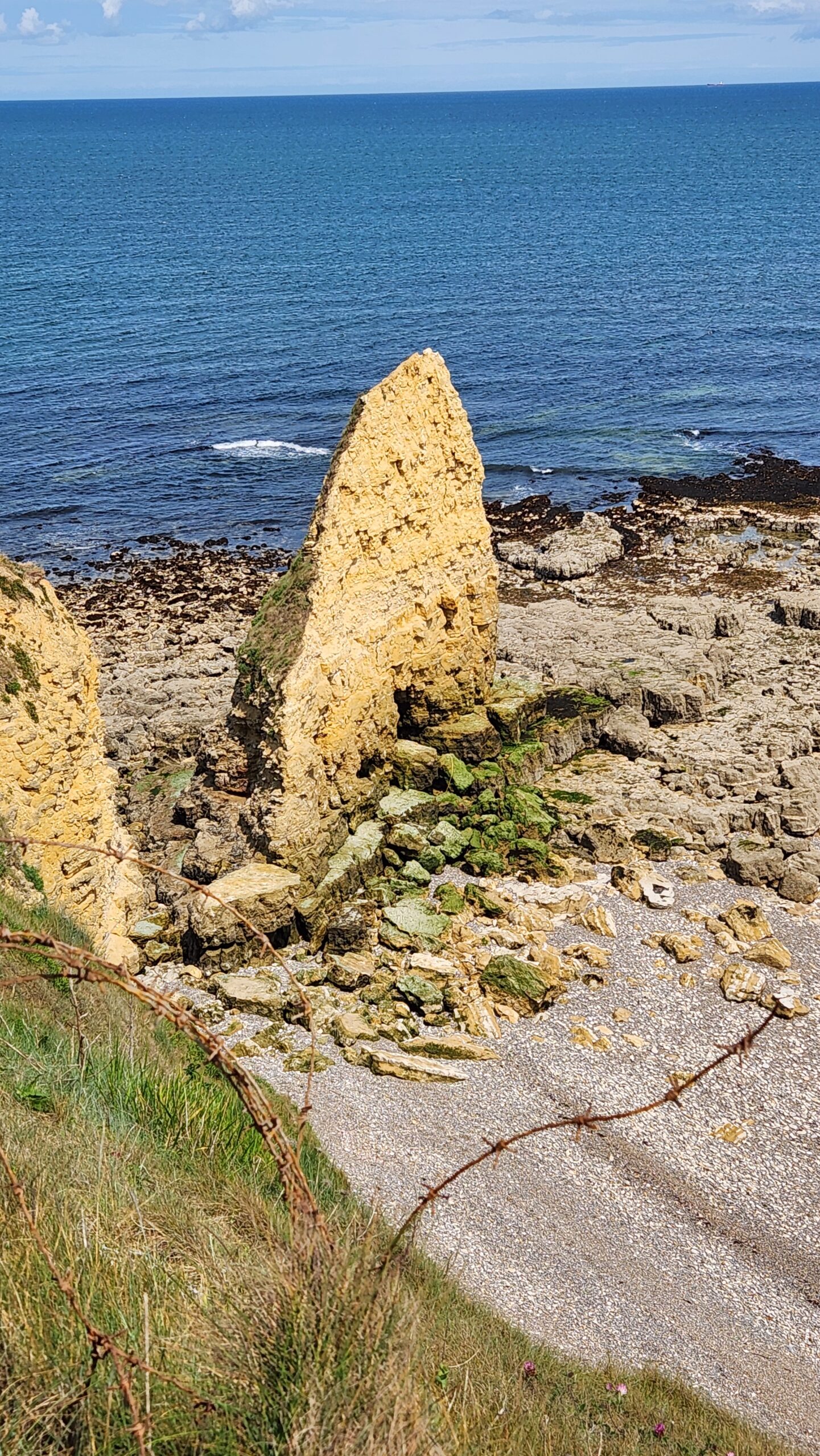
Restoration work has kicked off at Pointe du Hoc, the iconic D-Day site where U.S. Army Rangers scaled 100-foot cliffs amid fierce German fire on June 6, 1944, to neutralize artillery threats to Allied beaches. The 18-month, $10 million project by the American Battle Monuments Commission aims to preserve the monument’s historic integrity while addressing mounting hazards like erosion and falling cliffs that endanger visitors at the windswept English Channel overlook.
The initiative, launched with a groundbreaking ceremony Feb. 17, includes upgrades to parking areas, the memorial plaza, pathways and the visitor center. Temporary closures and restricted access are expected, though the site will stay open to the public. Pointe du Hoc, nestled between Omaha and Utah beaches, draws hundreds of thousands annually — 730,000 in 2024 during Paris’ Summer Olympics and 640,000 in 2025 — underscoring its enduring draw more than 80 years after the invasion.
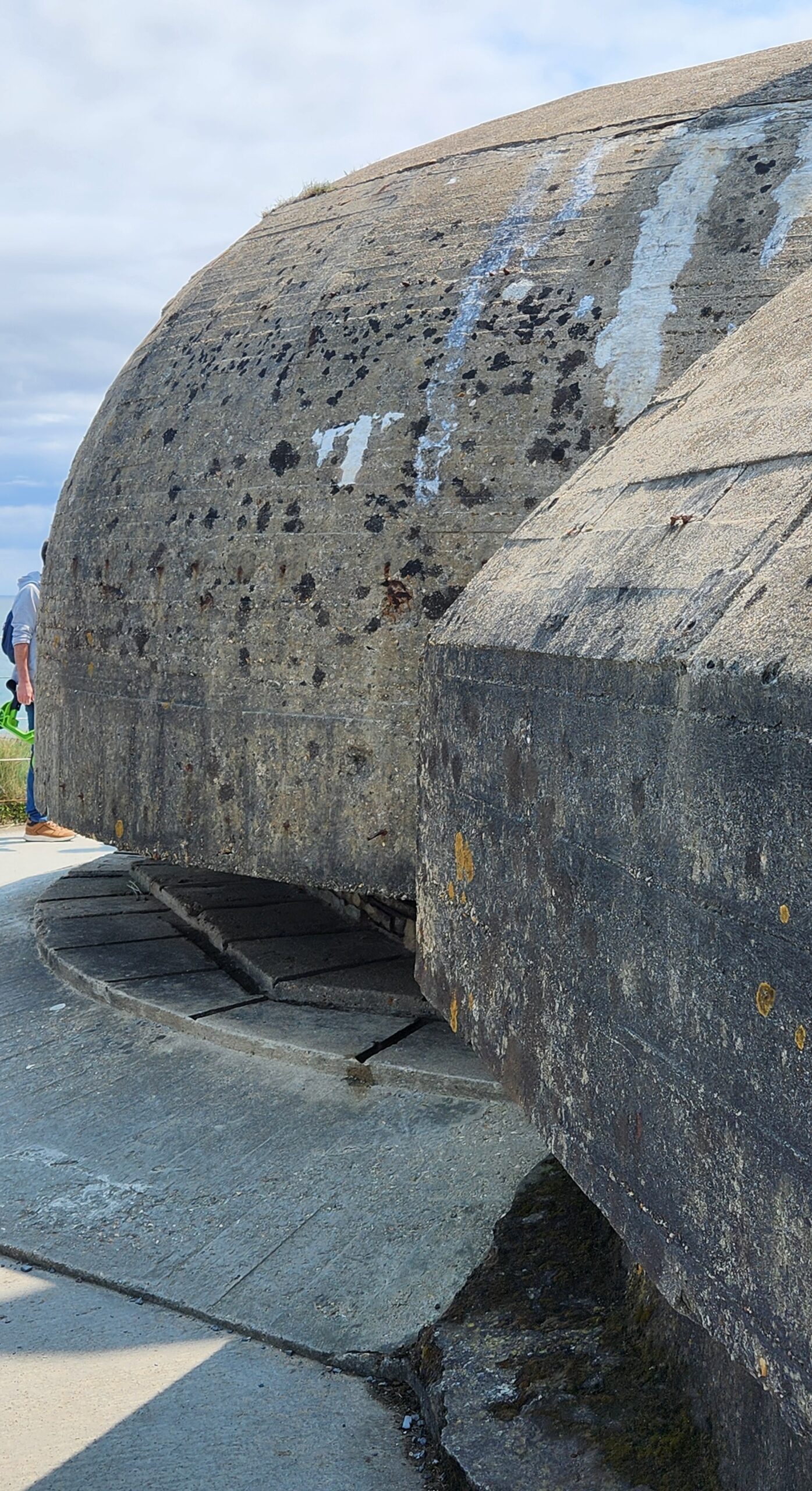
Pointe du Hoc now under renovation (Photo: Kevin Dennehy).
Erosion from relentless coastal winds and waves has destabilized the cliffs, raising risks of collapses and falls that could harm tourists exploring the cratered terrain and German bunker remnants. The commission’s efforts focus on stabilizing these features without altering the battlefield’s preserved wartime scars, ensuring safety amid natural wear that has accelerated over decades.
“We cannot stop the forces of nature, but we can take steps today that will ensure the site remains safe and accessible for future generations of visitors,” said commission Chairman Michael X. Garrett, in a Stars and Stripes story. The Rangers’ assault, involving about 225 soldiers who seized the position but lost more than half their fighting strength in two days, was immortalized in President Ronald Reagan’s 1984 “Boys of Pointe du Hoc” speech on the 40th anniversary.
Established post-World War I, the commission oversees U.S. military cemeteries and memorials abroad, including the nearby Normandy American Cemetery with over 9,400 graves overlooking Omaha Beach, which attracts more than 1 million visitors yearly. This report draws on a story first reported by Stars and Stripes, the independent military news outlet.