
DENVER—Traveling across America and the world has helped 1980s Brat Pack actor and travel writer Andrew McCarthy rediscover his love for the country and overcome personal fears through unexpected human connections.
In a recent talk at the Denver Travel and Adventure Show here, McCarthy, known for films such as “Pretty in Pink” and “St. Elmo’s Fire,” described a recent cross-country road trip from New York to San Francisco that took him through 22 states. He reconnected with old friends he hadn’t seen in decades and found himself surprised by the kindness of strangers in small towns.
“I discovered how friendly and kind and gracious and generous and welcoming America is,” McCarthy said. “I had a northerner’s fear of the Deep South. I went down to the Mississippi Delta, and it was an extraordinary place. The most exciting travel discovery I’ve made in the last 10 years was Mississippi.”
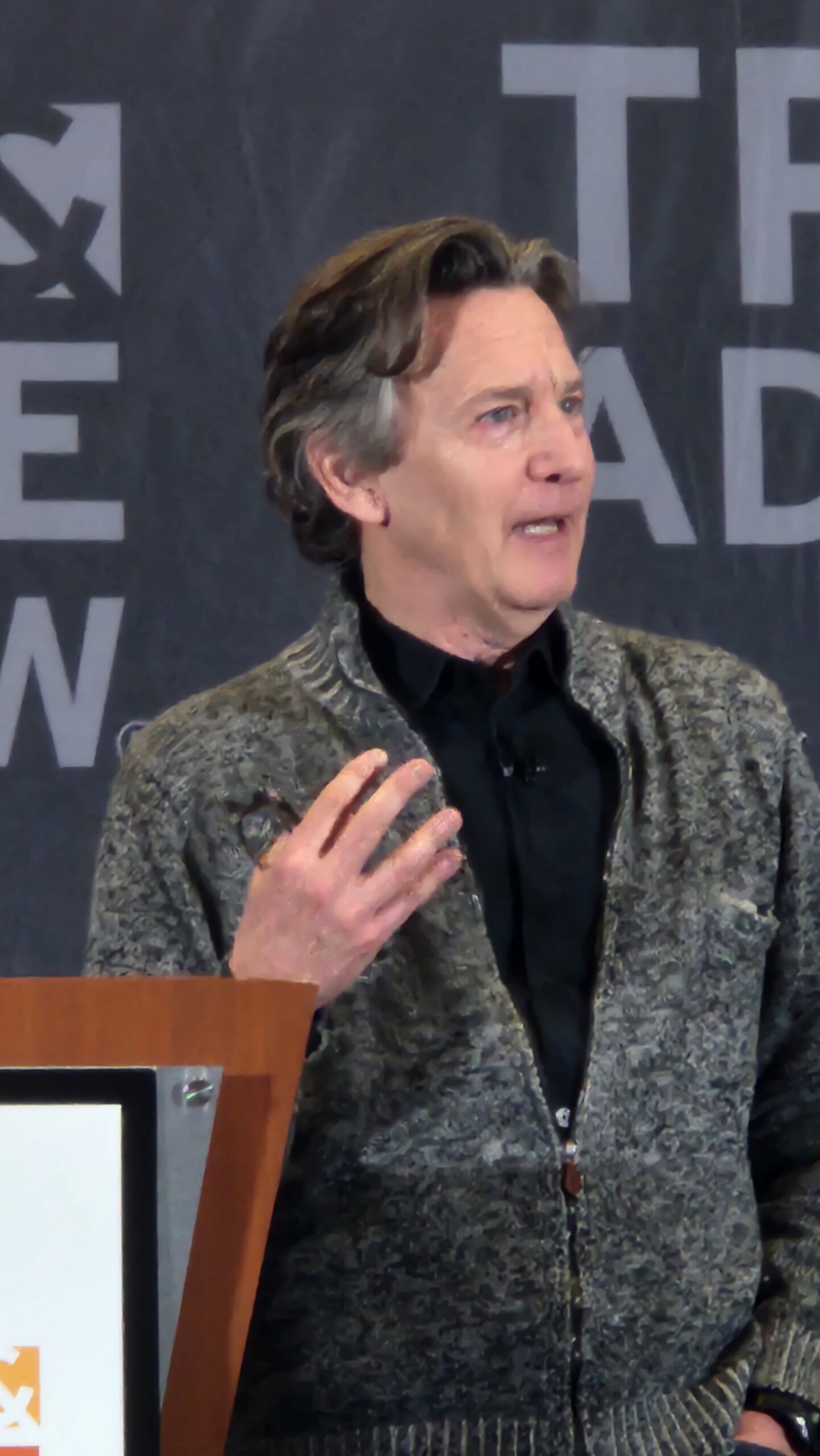
Andrew McCarthy (Kevin Dennehy)
He quoted Mark Twain — “Travel is fatal to prejudice, bigotry, and narrow-mindedness” — and referenced a Harvard University study that highlighted the importance of human connection. McCarthy argued that fear often prevents people from traveling, but travel itself is one of the best ways to overcome it.
He shared a pivotal story from 1986 when, as a 22-year-old in Ireland with a friend, he reluctantly agreed to play golf with an elderly local couple after their travel agent struggled to change their plane tickets. What began as an uncomfortable encounter turned into a lasting friendship. The couple, Tommy and Mrs. O’Hearn, eventually invited the young men to become lifetime overseas members of their golf club. That small act of stepping through fear, McCarthy said, led to repeated visits to Ireland, a deep connection to the country, and ultimately influenced major life decisions, including marriage and raising a family there.
McCarthy drew a distinction between vacationing and true traveling. He admitted he is not good at traditional vacations, where he expects to be pampered, but finds deeper satisfaction in traveling — even when it involves discomfort or getting lost.
He recalled emotional moments, such as sharing a single ice-cold Coca-Cola with his young son at a Sahara oasis after a long, hot desert drive, a memory his now-adult son still references years later. Another story from Jordan involved accepting an invitation to an Eid feast from a stranger who fixed his flat tire, an experience that created a profound sense of connection.
The actor-turned-writer also described climbing Mount Kilimanjaro, noting that middle-aged women reach the summit more often than young men because they are more willing to listen to their guides. He encouraged people to travel alone at least once, saying it can lead to powerful moments of self-discovery.
McCarthy said his career as a travel writer began after a chance encounter in Saigon with a young boy on a scooter who showed him the city from a local perspective. Writing about that day made him feel fully himself.
“Travel changes your life,” he said. “It’s not just Instagram posts and bucket lists. It goes deep and changes our place in the world if we let it.”
McCarthy advised aspiring travel writers to focus on telling stories rather than simply selling destinations, emphasizing that the most meaningful travel experiences often come from human connections formed while stepping through fear.