

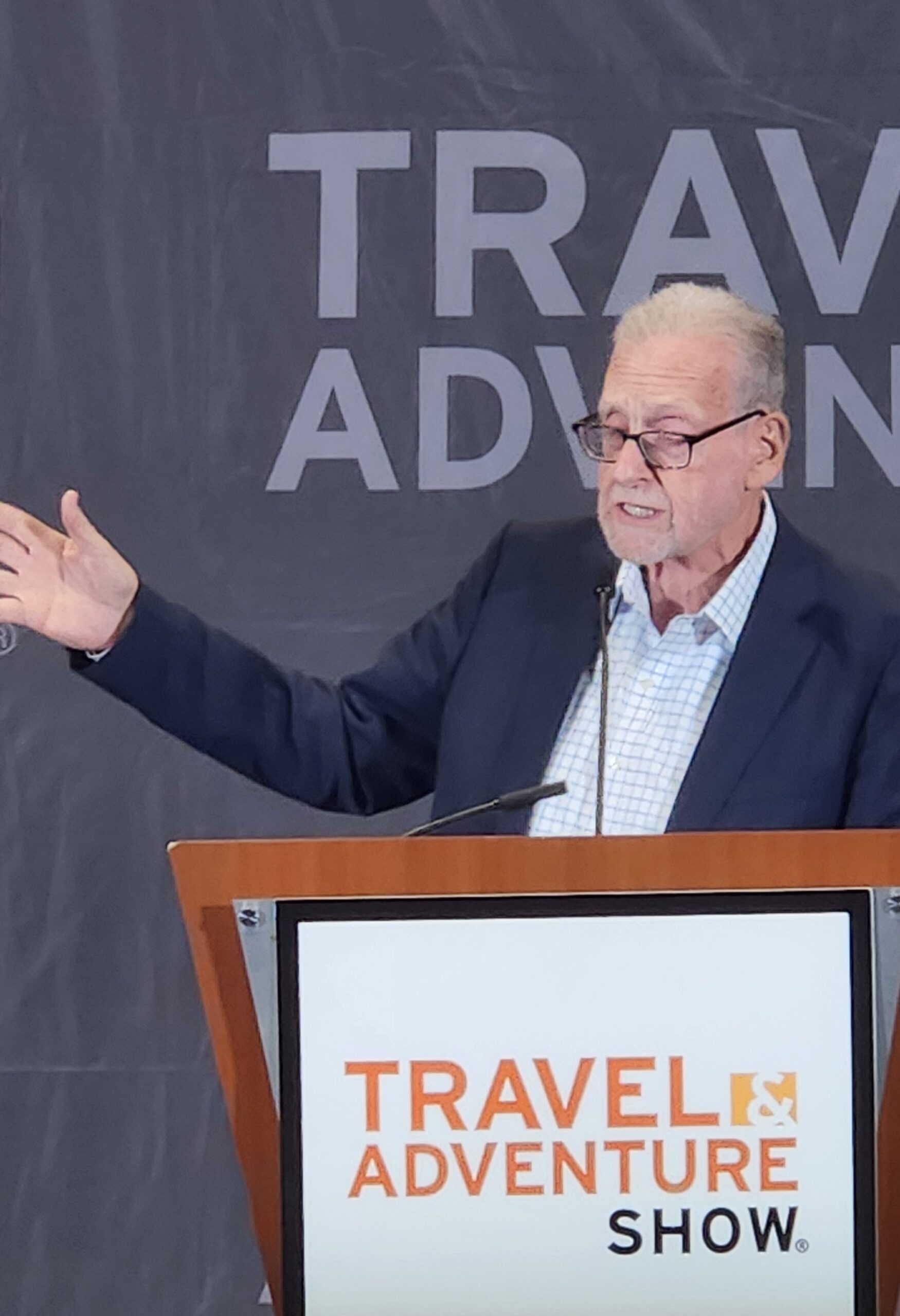
DENVER—Journalist and CBS News travel expert Peter Greenberg delivered a blunt warning to travelers: those who book exclusively online are setting themselves up to be taken advantage of in today’s difficult travel environment.
Speaking to a recent Denver Travel and Adventure Show audience amid global uncertainty and rising fear, Greenberg said dedicated travelers should focus less on whether to travel and more on how to travel smarter. He pointed out that only 41 percent of Americans hold passports, calling passport holders “blessed.”
Greenberg highlighted sharp declines in international travel, noting that foreign visitors to the U.S. have dropped by double digits over the past 13 months, while American outbound travel this summer is already down 14 percent year-over-year. He said the travel industry is currently losing $750 million per day due to recent tensions in the Middle East — losses that will likely be passed on to consumers.
The veteran reporter reserved his harshest criticism for online booking habits.
“If you make your reservations online, you are a loser,” Greenberg declared. He explained that online travel agencies only show limited inventory selected by the platform, often creating false urgency with messages like “only two seats left” or “only one room left.” These claims, he said, are misleading because they reflect only the allocation given to the agency, not actual availability.
Peter Greenberg (Kevin Dennehy)
Greenberg also warned against automatically choosing the lowest fare, which is usually “basic economy” with severely restricted passenger rights. He advised scrolling down for regular economy fares that offer better protections, allowing at least two-and-a-half hours for connections, and selecting the first flight of the day on an airline that does not base its operations at that airport for improved reliability and on-time performance.
He strongly urged travelers to move beyond the internet and speak directly with a human being — either a travel advisor or an airline or hotel reservation agent. Greenberg shared his own tactics, such as calling an airline’s international reservation line (for example, United’s number in Delhi instead of Denver) to avoid long hold times and uncover better routing options. He recounted saving $500 on a flight to Hawaii by routing through Phoenix after speaking with an agent.
Greenberg criticized hidden hotel fees, particularly resort fees, which he called a “tax dodge.” He recommended negotiating these charges directly and rejecting undisclosed add-ons such as mandatory bellman tips, even using credit card dispute rights if necessary.
On travel insurance, Greenberg advised opting out of the policies pushed during online bookings, which often provide unclear or inadequate coverage. He recommended purchasing trip cancellation and medical evacuation/repatriation insurance through reputable third-party providers such as Allianz, MedJet Assist, or Travel Guard.
He also cautioned against common pitfalls in cruising and all-inclusive resorts, including tiny balconies, expensive drink packages, single supplements, and misleading “all-inclusive” promotions that exclude many activities.
Greenberg encouraged travelers to abandon overcrowded bucket-list destinations and explore lesser-known places instead, arguing that fear and misleading information are keeping many from discovering better experiences.
Throughout his talk, Greenberg emphasized that real savings, better choices, and proper consumer protections come from direct conversations with people rather than relying solely on websites and apps.