
PARIS — Tucked away in a quiet corner of the city, far from the bustling crowds of Père Lachaise, lies the final resting place of the Marquis de Lafayette. The French aristocrat and military officer, revered as a hero in both France and the United States for his crucial role in the American Revolutionary War, is buried in Picpus Cemetery.
For American travelers and history enthusiasts, a visit to the grave offers a profound connection to the founding of the United States. Lafayette is buried beneath soil brought from Bunker Hill in Boston, ensuring he rests in American earth. An American flag flies permanently over his grave and is replaced every year on the Fourth of July in a joint French-American ceremony. His wife, Adrienne de Noailles, lies buried directly next to him.
While there is a nearby soccer field attached to the cemetery, the feeling is somber, even dark because of the history of the area that is tied to the country’s turbulent Reign of Terror.
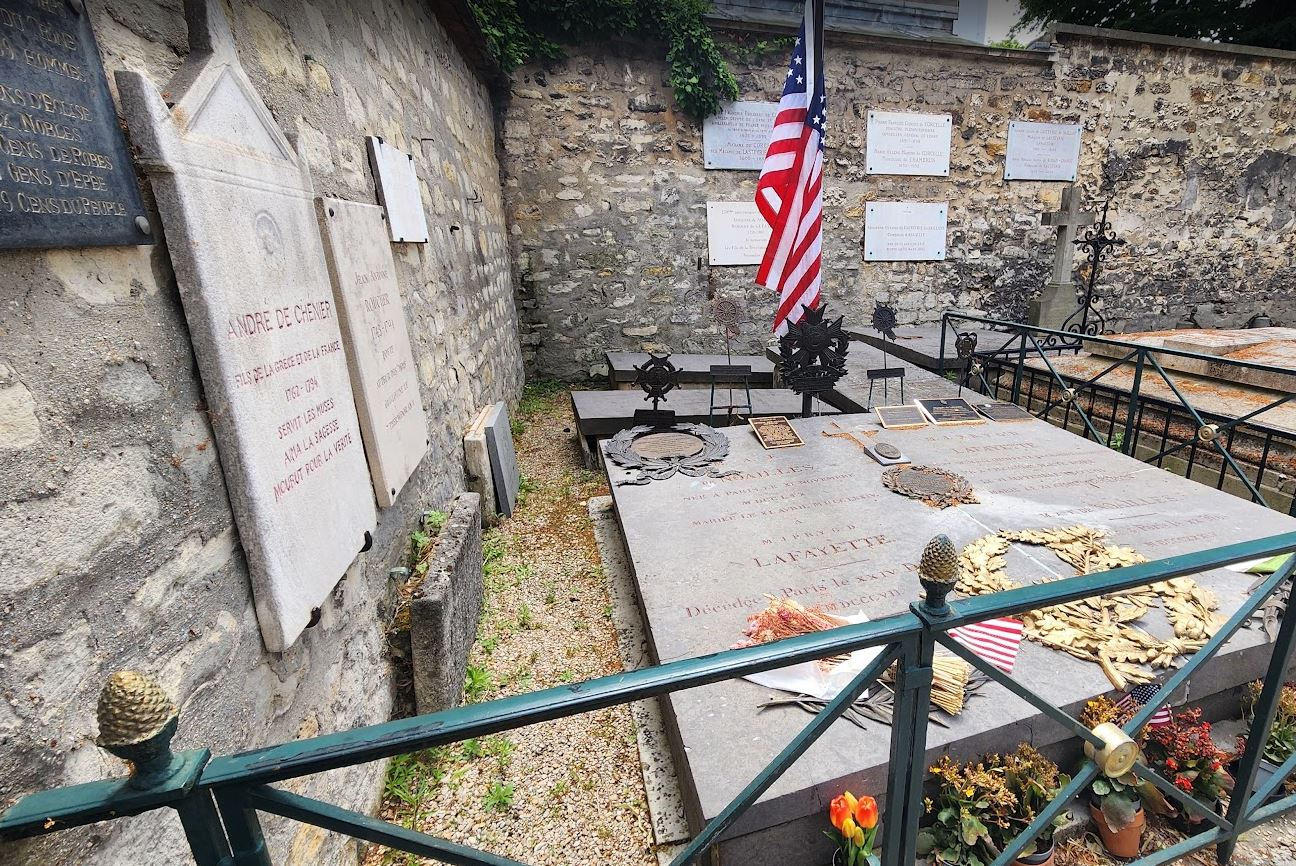
Lafayette is buried next to his wife (Kevin Dennehy).
Getting There
Picpus Cemetery is located at 35 Rue de Picpus in the 12th arrondissement.
Visitors can reach the site easily via the Paris Métro. The closest stations are Picpus (Line 6) and Nation (Lines 1, 2, 6, and 9, as well as the RER A train). From either station, the cemetery is a short, five-minute walk.
Hours and Admission
The cemetery is private and maintains limited operating hours compared to municipal Paris parks.
- Hours: Open daily from 2 p.m. to 6 p.m.
- Closures: Closed on mornings, major French national holidays, and Sundays during the off-season.
- Admission: A small entry fee of approximately 2 to 3 euros is collected at the entrance to help maintain the grounds.
What to See in the Cemetery
Picpus Cemetery holds a somber place in French history beyond Lafayette’s resting place. It is the largest private cemetery in Paris and serves as a memorial to the victims of the Reign of Terror during the French Revolution.
Visitors will find:
- The Mass Graves: Two large pits containing the bodies of 1,306 people executed by the guillotine at the nearby Place de la Nation between June 14 and July 27, 1794.
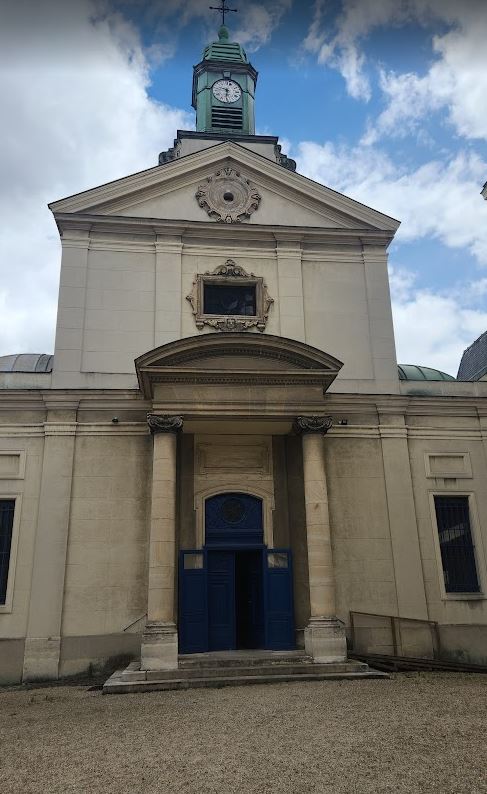
- The Chapel of Our Lady of Peace: A small historic chapel housing a 16th-century statue of the Virgin Mary. Inside, large marble tablets line the walls, engraved with the names, ages, and occupations of every individual who perished during the Terror and was buried in the communal pits.
Lafayette is buried in the historical section adjacent to these graves because his wife, Adrienne de Noailles, lost her grandmother, mother, and sister to the guillotine during the Terror.
In the Area
The surrounding 12th arrondissement offers several attractions within walking distance of the cemetery:
- Place de la Nation: A historic public square featuring the grand “Triumph of the Republic” bronze monument.
- The Promenade Plantée (Coulée verte René-Dumont): A scenic, elevated park walkway built on an old railway line, located about 10 minutes away.
- Bercy Village: A nearby outdoor shopping and dining area housed in restored 19th-century wine warehouses.