


Cover Photo: Stuart Tank recovered in the English Channel (Kevin Dennehy).
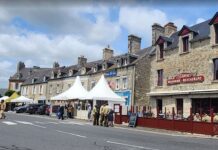
COMMES, France—One of the more interesting museums in Normandy, and often overlooked, is the Musée des Épaves Sous‑Marines du Débarquement (Museum of Landing Shipwrecks), which allows visitors to gain insight into underwater wrecks that played a crucial role in World War II coastal operations.
The museum, founded in 1970 and located just south of Port-en-Bessin, features a collection of once-submerged relics that include Sherman DD tanks, M7 self‑propelled guns, torpedoes, personal effects, and naval machinery.
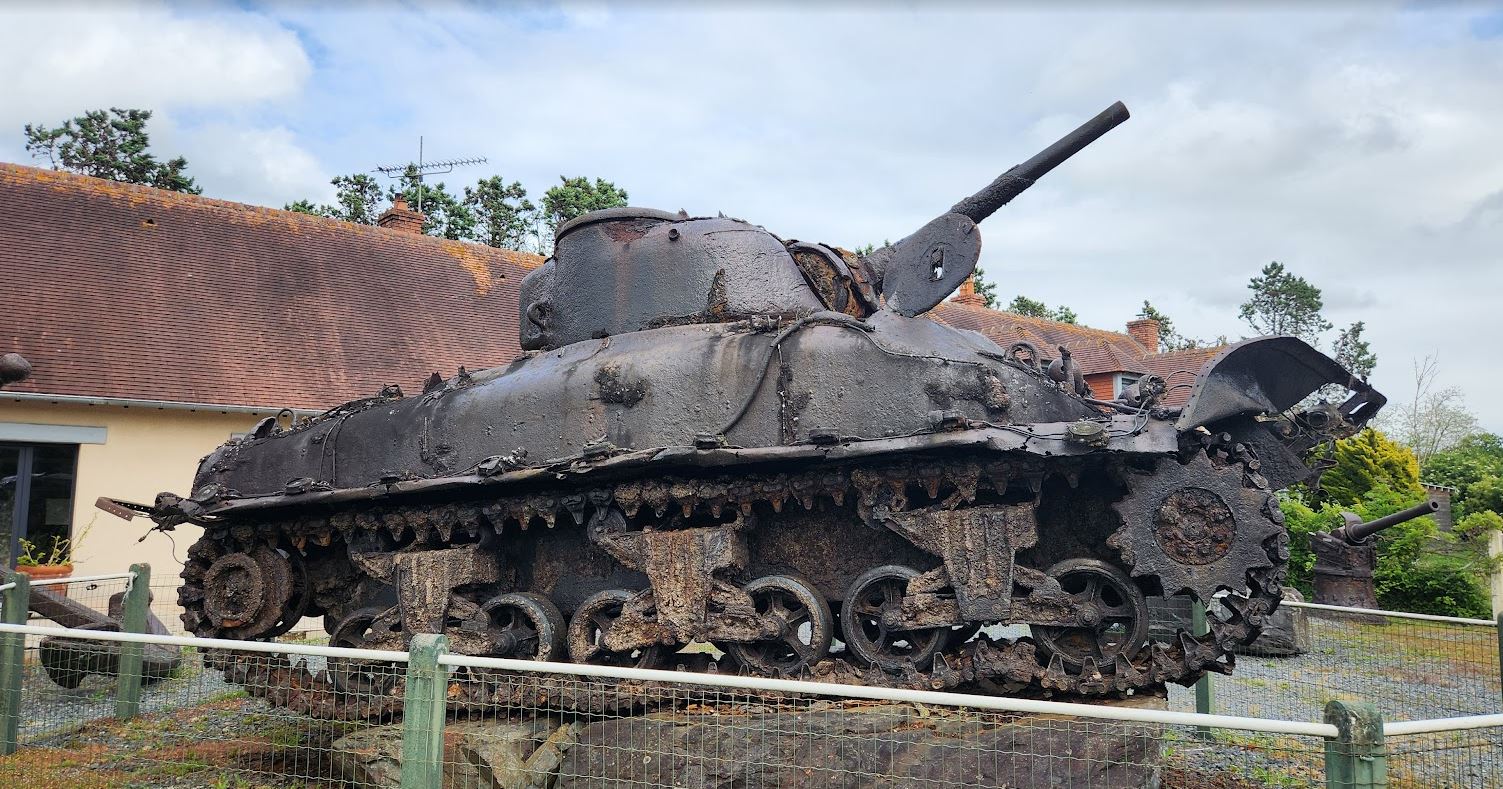
DD Sherman tank recovered in the English Channel (Kevin Dennehy).
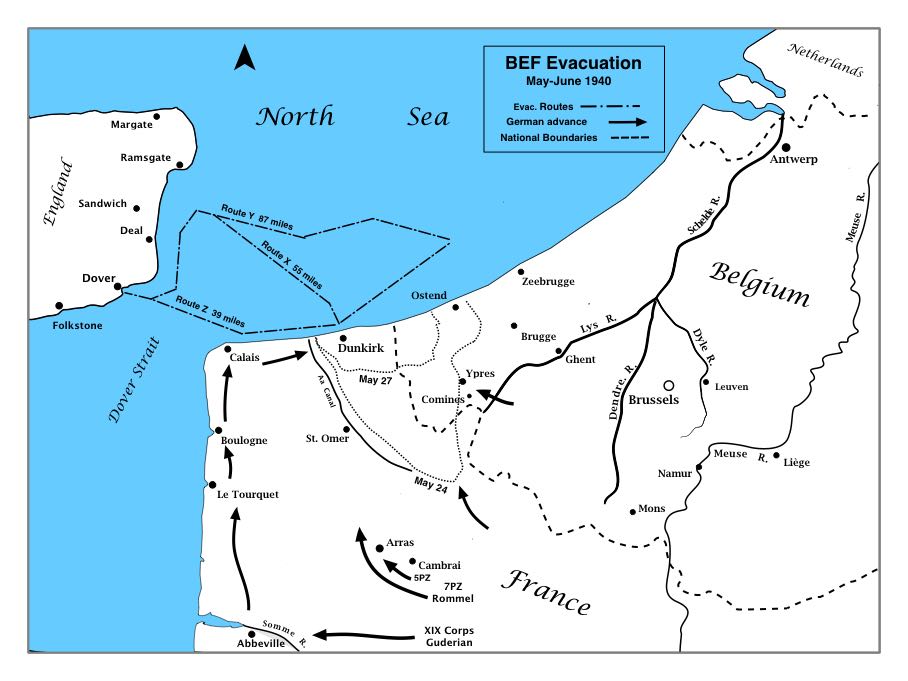
The museum, in its outdoor displays, features a DD Sherman tank sunk four miles from Omaha Beach in 88 feet of water. On June 6, at 6:30 am, 32 amphibious DD tanks from the 741st Tank Battalion were launched, but 27 sank in the heavy seas. Only two reach the beach.
Most of the artifacts, ship’s parts, airplanes and vehicles were recovered during 35 years of underwater archaeology in the nearby English Channel by Jacques Lemonchois, who was tasked with clearing dangerous wrecks off the Normandy coast. Many of the vehicles, naval debris and personal effects, which laid on the seabed for decades, were associated with the June 6, 1944, D-Day invasion.
Beware…most of the museum’s 52-minute salvage operations documentary, photo displays and information panels are fascinating, but are in French.
The Story of Survivor John Glass…
Normandy is full of survivor’s stories—some that are extraordinary and even miraculous. The museum features a display about John Glass, a corporal in the 58th Armored Artillery Battalion, whose landing craft was sank by enemy fire during D-Day.
The young artilleryman’s LCT (Landing Craft-Tank) hits a mine on the way to Omaha Beach and sinks with jeeps, half-tracks and M7 Priest self-propelled guns. Many crew members are killed during the explosion and subsequent sinking.
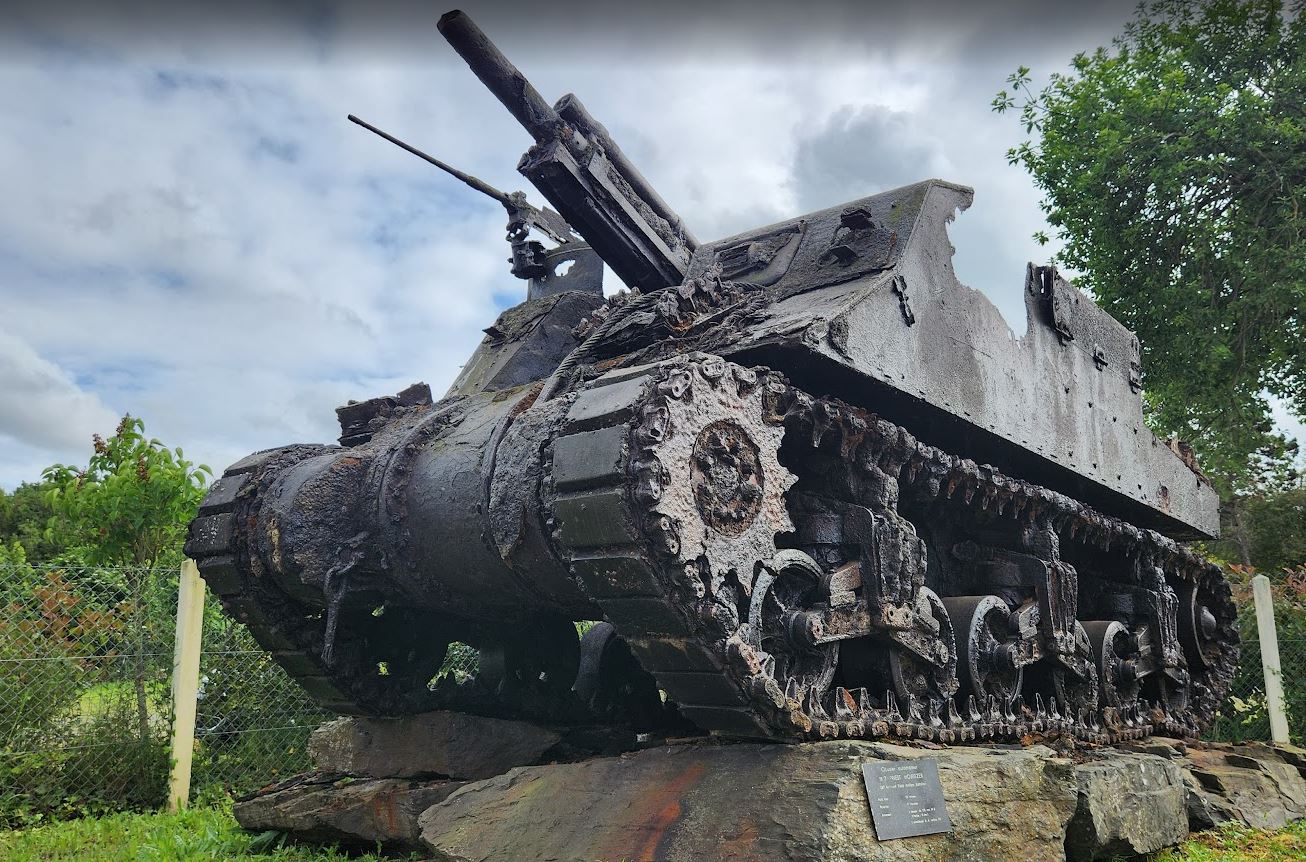
M7 Priest driven by John Glass recovered in 1982 (Photo: Kevin Dennehy).
In 1982, three M7s were recovered, in 180 feet of water, from the English Channel with their loads intact. In one of the vehicles, a bag with the personal effects of John Glass were found in perfect condition under the driver’s seat.
Through a letter written to a girlfriend, and help of a former officer in the unit, Glass was contacted in North Carolina. Glass decided to come back to Normandy to collect his boots, shaving soap, personal mail and packs of cigarettes.
As driver of M7s, Glass had already fought in North Africa and Sicily invasions. When the landing craft was hit, he was rescued by a small boat that placed him on Omaha Beach.
Nearly naked, he ran through heavy fire, near wounded and dead soldiers on the beach. He manages to find another unit to join and fights with them to clear the beach. He rejoins his unit, is given another M7 to drive, and fights through to St. Lo, the liberation of Paris and then in the tough fighting during the Battle of the Bulge.
Glass retired as an electrician in North Carolina.
If you go:
Address
Musée des Épaves Sous‑Marines du Débarquement
26 Route de Port (Route de Bayeux), 14520 Commes (Port‑en‑Bessin), France.
Phone: +33 2 31 21 17 06 (sometimes +33 6 77 51 68 34).
Hours
June 1 – September 30: Open daily (closed Saturdays) from
10 a.m.–12 p.m. and 2 p.m.–7 p.m. (last tickets at 6 p.m.).
May: Open on weekends and public holidays during the same times.
Closed October through April (winter closure).
Admission
Adult (17+): €8.
Child (6–16): €5.
Parking
On-site car park available.





, which allows visitors to gain insight into underwater wrecks that played a crucial role in World War II coastal operations.)